Residential Pool Fencing: Pool Safety, Code Requirements & What Homeowners Should Know Before 2027
A new swimming pool is an exciting addition to any Arizona backyard. Whether you’re planning a pool installation for 2027, purchasing a home with an existing pool, or thinking about upgrading an older fence, there’s one important detail you don’t want to overlook: your pool barrier.
Residential pool fencing isn’t just about creating a boundary around the water. It’s an important safety feature designed to help prevent accidental access to the pool, particularly for young children.
In Arizona, residential swimming pools are subject to pool barrier requirements, and homeowners need to make sure their fencing, gates, and access points meet applicable safety standards.
At DCS Pool Barriers, we specialize in custom residential wrought iron pool fencing designed to provide protection while complementing the look of your backyard. Here’s what homeowners should know when planning a new pool, purchasing a property, or considering a pool fence upgrade.
1. Planning a New Pool for 2027? Don’t Forget the Pool Fence.
When planning a new pool, it’s easy to focus on the exciting details: the pool shape, water features, decking, landscaping, and outdoor entertaining space.
But pool fencing should be part of the planning process from the beginning.
Arizona has residential pool enclosure requirements intended to help prevent accidental drownings. Under Arizona Revised Statutes § 36-1681, qualifying residential swimming pools must be enclosed by a barrier that is generally at least five feet high, with restrictions on openings and climbable features. Gates must also meet specific safety requirements. Local jurisdictions may have additional requirements.
Planning your pool barrier early can help you avoid last-minute changes, installation delays, or unexpected expenses as your pool project approaches completion.
A few things to consider when planning your pool fence include:
- Fence height and spacing: The barrier must meet applicable height and opening requirements.
- Gate safety: Pool gates need appropriate self-closing and self-latching hardware.
- Fence placement: The location and layout of your barrier matter, especially when incorporating existing walls or other structures.
- Property layout: Slopes, landscaping, retaining walls, and changes in elevation can affect installation.
If you’re building a pool for 2027, now is a great time to start thinking about your pool fencing options and include them in your overall backyard plans.
2. Buying a Home with a Pool? Check the Fence, Too.
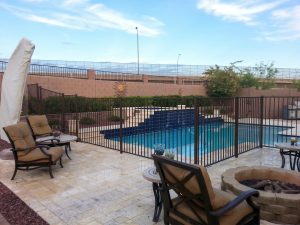 Buying a home with a swimming pool can be a big selling point, especially in Arizona. But before settling into your new backyard, take a closer look at the pool fencing.
Just because a fence is already there doesn’t necessarily mean it meets current requirements or is in good condition.
Older pool fences may have:
- Loose or damaged fence panels.
- Rust or deterioration around posts and connections.
- Gates that no longer close or latch properly.
- Outdated spacing or fence designs that may not meet current requirements.
- Damage or alterations from previous landscaping or backyard renovations.
It’s worth having the existing pool barrier evaluated, particularly if you have young children or frequently host family and friends.
If the fence needs attention, DCS Pool Barriers also offers pool fence repair services, helping homeowners address damaged or aging fencing.
A little attention to pool safety before moving in can make a big difference in preparing your backyard for years of enjoyment.
3. Does Your Current Pool Fence Need an Upgrade?
Even if your pool fence was installed years ago, that doesn’t mean it’s something you can forget about.
Arizona’s weather can be tough on outdoor metalwork. Between intense summer sun, monsoon storms, and everyday wear, fences and gates can eventually need maintenance, repairs, or replacement.
Here are a few signs it may be time to consider an upgrade:
- Visible rust or deterioration: Metal fencing should be inspected for corrosion, especially around connections and posts.
- Gate problems: A pool gate that doesn’t consistently self-close and self-latch needs attention.
- Loose or damaged sections: Missing components, loose posts, or damaged panels can compromise the barrier.
- Changes to your backyard: New landscaping, decking, or other improvements may affect the placement or condition of your existing fence.
- Outdated design: If your current fence no longer meets applicable safety requirements, replacement may be necessary.
Pool fencing is an important safety feature, so repairs and upgrades shouldn’t be put off when problems arise.
4. Why Choose Custom Wrought Iron Pool Fencing?
Pool safety doesn’t mean you have to sacrifice the appearance of your backyard.
Custom wrought iron pool fencing offers a durable, attractive solution that can complement your home’s architecture and outdoor design.
At DCS Pool Barriers, residential pool fencing is manufactured using premium-grade, 16-gauge steel and powder-coated for a quality finish.
Here’s what makes their fencing a great option for Arizona homeowners:
- Custom manufacturing: Fencing is made to order to accommodate your property’s layout and design needs.
- Durable materials: Premium-grade steel provides a sturdy foundation for residential pool barriers.
- Quality finishes: Powder coating and electrostatic painting options help create an attractive finished product.
- Galvanization option: DCS offers galvanization on its metalwork products, with a 10-year warranty against rust.
- Professional installation: Trained installers can handle a variety of property layouts and terrain.
From straightforward pool enclosures to custom designs that coordinate with your backyard, DCS works to create fencing that looks good while serving an important safety purpose.
Explore residential wrought iron pool fencing from DCS to see how custom fencing can work for your property.
5. Understanding Pool Fence Code and Gate Safety
One of the most important parts of residential pool fencing is making sure the installation meets applicable pool barrier codes.
Arizona Revised Statutes § 36-1681 establishes general requirements for residential pool enclosures. These include:
- Barrier height: Generally, at least five feet high, measured from the exterior side.
- Opening restrictions: Openings must not allow a four-inch sphere to pass through.
- Climb protection: Barriers must be designed without accessible exterior handholds or footholds that could be used for climbing.
- Gate requirements: Gates must be self-closing and self-latching and open outward, away from the pool.
- Latch placement: Specific height and placement requirements apply to gate latches.
Local cities and counties may have additional requirements or amendments, so homeowners should verify the applicable standards for their property before installing or modifying a pool barrier.
azleg.gov+2
It’s also important to remember that pool fencing is just one part of a complete pool safety plan. Adult supervision, appropriate access controls, and additional safety measures all play an important role in protecting children around water.
At DCS Pool Barriers, safety is at the heart of what we do. We understand the importance of properly constructed pool barriers and quality gate hardware.
6. Start Planning Your Pool Fence with DCS Pool Barriers
Whether you’re preparing for a brand-new pool in 2027, moving into a home with an existing swimming pool, or updating an older fence, DCS Pool Barriers can help you explore your residential pool fencing options.
DCS Pool Barriers manufactures custom wrought iron fencing right here in Phoenix, Arizona, using quality materials and professional fabrication processes. From customized designs and finishes to installation on challenging terrain, the team works to create pool barriers that fit your property and its safety needs.
Serving Scottsdale, Phoenix, Tempe, Gilbert, Chandler, Mesa, and communities throughout the Valley, DCS Pool Barriers is ready to help homeowners make pool safety a priority.
Make Pool Safety Part of Your Backyard Plans
Your backyard should be a place where family and friends can relax and enjoy Arizona living. Making sure your pool is properly enclosed is an important step toward creating a safer environment.
Don’t wait until your new pool is almost finished or until an aging fence becomes a problem. Start planning ahead and make sure your pool barrier is part of the conversation.
Contact DCS Pool Barriers today at 623-825-7700 to schedule a free consultation and discuss your residential pool fencing project!