
Pool Fence Repair Signs Arizona Property Managers Should Notice
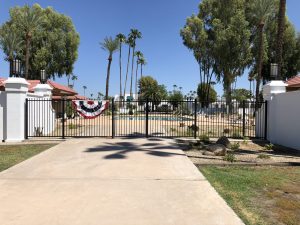 If you manage a pool property in Arizona, fence and gate problems rarely start out as major failures. More often, they begin with something small: a latch that doesn’t catch every time, a gate that starts to sag, a fence panel that shifts after landscaping work, or a new opening that appears along the barrier.
Those small issues are worth addressing early. A pool barrier is supposed to provide a dependable layer of protection, not something you only think about when it stops working altogether. In Arizona, where pools can be in use for much of the year, regular inspections and timely repairs can help keep the barrier functioning as intended.
Arizona law and local codes establish specific requirements for pool barriers, including self-closing and self-latching gates and climb-resistant designs. The City of Phoenix also provides guidance addressing pool barrier compliance and health and safety requirements.
If you’re responsible for a residential or commercial pool and aren’t sure whether a fence or gate issue requires repair, contact DCS Pool Barriers to discuss your pool barrier needs, or read on for more information!
Why Pool Fence Repair Deserves Attention Early
A damaged pool fence isn’t simply a cosmetic concern. If a barrier no longer closes reliably, latches securely, or maintains appropriate spacing between pickets, it may no longer provide the protection it was designed to provide.
Arizona’s pool enclosure law includes specific requirements for gates, including self-closing and self-latching operation, latch placement, and outward swing. Phoenix’s pool guidance similarly calls for non-climbable barriers with self-closing, self-latching gates.
For property managers, the key question is simple: Does the barrier work reliably every time? If a gate only closes when someone pulls it firmly, or the latch requires a second attempt to engage, that’s a sign the hardware or alignment should be inspected.
This is particularly important at multifamily properties, where Phoenix notes that interior pool barriers are required regardless of whether children live on the property.
Common Signs That a Pool Fence or Gate Needs Repair
1. The Gate Does Not Self-Close All the Way
A properly functioning self-closing gate should return to the closed position on its own. If it stops partway, rubs against the ground, or needs to be pushed shut, the hinges or other hardware may be worn, misaligned, or obstructed.
The U.S. Consumer Product Safety Commission’s pool barrier guidance recommends that pool access gates open outward and be self-closing and self-latching. Arizona law includes similar requirements.
2. The Latch Does Not Catch Consistently
A latch that misses the strike plate, requires extra force, or seems to bounce back open shouldn’t be ignored.
Sometimes the problem is simply alignment. Other times, worn or corroded hardware may be the culprit. Latch placement matters, too. Arizona law establishes specific requirements for latch height and release mechanisms, while Phoenix guidance addresses keeping latches inaccessible to small children.
3. Rust, Corrosion, or Coating Failure Is Spreading
Arizona’s intense sun and weather conditions can take a toll on metal fencing and gate hardware over time. Surface rust around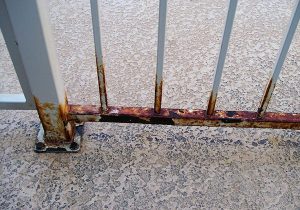 posts, hinges, welds, or latch components may seem minor, but corrosion can eventually affect both appearance and operation.
If the barrier is part of a custom metal system, a repair should address the underlying problem rather than simply covering up the visible damage.
At DCS Pool Barriers, we provide custom pool fencing solutions for residential and commercial propertiesthroughout the Phoenix area, along with fence repair services to help keep existing barriers in good working condition.
4. Fence Panels Lean, Loosen, or Shift After Landscaping or Concrete Work
Changes to the area surrounding a pool can affect the barrier even when the fence itself hasn’t been damaged. New pavers, concrete, irrigation, landscaping, or changes in the soil around a post can affect alignment and stability. A leaning fence may also cause a gate to stop closing or latching properly.
Even if the fence still looks mostly intact, changes to its alignment can affect spacing and other barrier requirements. If landscaping or hardscape work has recently been completed near the pool, it’s a good time to inspect the fence as well.
5. Openings Are Larger Than They Should Be
Small gaps can become a significant concern when fencing shifts or components become damaged.
The City of Phoenix states that barrier openings must generally be less than four inches wide, with additional requirements for certain types of fencing. Arizona law also addresses mesh sizes and openings around latch mechanisms.
Broken pickets, bent fence members, displaced landscaping, or worn hardware can all create openings that weren’t present when the barrier was originally installed. If you notice a new gap, don’t assume it’s too small to matter.
6. Something Climbable Has Been Added Near the Fence
Sometimes the barrier itself hasn’t changed—but the area around it has.
Planters, outdoor furniture, storage bins, decorative objects, toys, or landscape features can create convenient stepping points near a pool fence. Arizona law addresses accessible handholds and footholds that could make a barrier easier to climb, and the CPSC similarly recommends barriers that don’t provide easy climbing opportunities.
As part of a regular inspection, take a look at what’s around the fence as well as the fence itself. Moving an object may be all that’s needed to eliminate a potential climbing aid.
7. The Fence No Longer Fits the Property Layout
Pool areas can change over time. A remodeled patio, new door, widened side-yard opening, or changes to the route between the home and pool can create access issues that weren’t present when the barrier was installed.
Phoenix also notes that when a dwelling wall forms part of the pool enclosure, doors and windows may be subject to additional requirements.
In other words, don’t assume an older barrier remains appropriate simply because it passed inspection when it was first installed. Changes to the property can alter the way the barrier needs to function.
What to Inspect First
If you’re trying to determine whether a pool fence needs repair, start with a simple walk-through of the entire barrier.
Check the Gate
Open and close the gate several times. Ask:
- Does it swing closed on its own?
- Does the latch catch every time?
- Does the gate drag, stick, or scrape?
- Does it open outward, away from the pool, where required?
Don’t test it just once. A gate that works occasionally isn’t the same as a gate that works reliably.
Check the Hardware
Look closely at hinges, latches, screws, mounting points, and other hardware. Loose or corroded components can be early signs of a larger problem.
If the hardware is simply worn or misaligned, targeted repair may restore reliable operation without replacing the entire fence.
Check the Barrier Line
Walk the entire perimeter rather than focusing only on the gate. Look for:
- Bent or damaged sections
- Loose or missing fasteners
- Leaning or shifted posts
- Changes in the spacing between pickets
- New openings or gaps
- Areas where the fence meets the house, wall, planter, or gate post
Check Nearby Objects and Surfaces
Finally, step back and look at the area surrounding the barrier. Has anything been added that could make the fence easier to climb? Have pavers, concrete, soil, or landscaping changed the height or position of the fence?
These details are easy to overlook during a quick inspection but can make a meaningful difference.
When Repair May Be Enough—and When Replacement Makes More Sense
Not every pool fence problem requires a complete replacement. Repair may be the better option when the problem is localized, such as a worn latch, sagging gate, loose hinge, or damaged section of fencing. Targeted repairs can restore function while preserving the existing barrier and the overall look of the property.
Replacement may make more sense when:
- The frame is badly corroded
- The gate no longer aligns properly after repeated adjustments
- Multiple sections are damaged
- The barrier no longer fits the current pool layout
- The existing design is difficult to bring back into a code-conscious condition
For commercial properties, durability and ongoing maintenance should also factor into the decision. A pool barrier may serve residents, guests, tenants, or members who aren’t familiar with how the gate is supposed to operate, making reliable performance especially important.
Arizona Rules Are Specific, So Verify the Requirements for Your Property
Arizona law establishes baseline requirements for pool enclosures, but local jurisdictions may have additional requirements or interpretations. Phoenix, for example, publishes pool barrier requirements and technical documents that reference the 2024 International Swimming Pool and Spa Code (ISPSC).
That means the right repair approach can depend on the property’s location, pool configuration, and type of use.
If you’re unsure whether you’re dealing with an exterior fence, an interior barrier, or a configuration where the dwelling itself forms part of the enclosure, check the requirements that apply to your property before making major changes. This is especially important for apartments, condominiums, hotels, and other shared-use properties.
Why a Professional Inspection Helps
Sometimes a pool fence problem is easy to identify. Other times, what looks like a simple hardware issue may be a sign of a larger alignment or structural problem.
A professional repair specialist can evaluate the barrier as a whole—including the fence, gate, hardware, spacing, and surrounding property—and help determine whether repair or replacement makes the most sense.
At DCS Pool Barriers, we focus on the condition and function of the entire barrier: what’s worn, what can be repaired or adjusted, and what should be replaced. Our goal is to help Arizona property owners maintain pool barriers that are functional, durable, and designed to complement the surrounding property.
Next Steps for Arizona Pool Owners and Property Managers
If your pool fence or gate is showing signs of wear, don’t wait for a small problem to become a bigger one. Start by checking the gate, latch, hardware, posts, openings, and surrounding area. If something isn’t working as it should, have it evaluated before the problem gets worse.
For Arizona homeowners and property managers, the goal is straightforward: keep the barrier functional, keep it aligned with the requirements that apply to your property, and keep the pool area looking its best.
If you’re unsure whether your pool fence needs a simple repair or a more extensive solution, contact DCS Pool Barriers to schedule an evaluation and discuss your options!
FAQ
How often should a pool fence or gate be inspected?
It’s a good idea to inspect the barrier regularly and any time something occurs that could affect its alignment or condition, such as landscaping, concrete work, storms, or heavy use. The most important thing is to catch changes early and make sure the gate continues to close and latch reliably.
What is the most common pool gate problem?
One common issue is a gate that no longer self-closes or self-latches reliably. This can result from hinge wear, misalignment, corrosion, or an obstruction near the gate.
Can a damaged pool fence just be patched?
Sometimes. If the problem is limited to hardware, a small section of fencing, or a minor alignment issue, a targeted repair may be enough. If multiple components are failing or the barrier no longer works well with the property’s layout, replacement may be the better long-term solution.
Do Arizona pool barrier rules apply the same everywhere?
No. Arizona has statewide requirements, but local jurisdictions may have additional requirements or code interpretations. Phoenix, for example, publishes its own pool barrier guidance and technical documents. Always confirm the requirements that apply to your property’s location and use.
Does a pool fence replace supervision?
Never! A pool barrier is an important layer of pool safety, but it can never replace constant, attentive adult supervision whenever children or pets are near the water.