
Pool Barrier Safety Checklist: Is Your Pool Area Truly Secure?
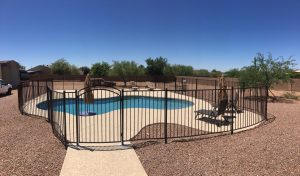 For Arizona homeowners, a backyard pool is one of the best ways to enjoy the long summer season. But with pool ownership also comes an important responsibility: making sure that your pool area is properly secured to help protect children, pets, and guests from accidental, unsupervised access.
Installing pool fences and gates is an essential first step, but ongoing inspections and maintenance are nearly as important. Over time, even high-quality pool barriers can experience wear and tear from weather, moisture, daily use, and age.
Not sure whether your pool barriers are still doing their job? Here’s a quick checklist to help evaluate the safety and condition of your pool area:
1. Do Your Pool Gates Close Automatically?
One of the most important features of any pool gate is its ability to close on its own every single time. If a gate is left open—even briefly—it can create an opportunity for a child or pet to enter the pool area without supervision. Therefore, Arizona pool safety regulations require gates to be self-closing.
As you inspect your gates, ask yourself:
- Does the gate fully close without assistance?
- Does it swing freely without sticking?
- Has the gate begun sagging over time?
- Does it latch securely after closing?
The answers to these questions can help you determine whether it’s time for a gate repair or even a new gate.
2. Are the Gate Latches Working Properly?
Self-latching mechanisms provide another critical layer of pool safety. A gate that closes but fails to latch 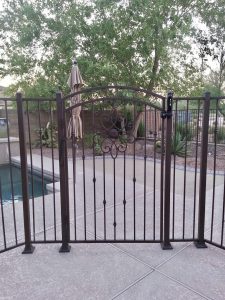 properly can still allow unauthorized access to the pool area.
Check for the following:
- The latch engages consistently after the gate closes
- The latch is not loose, rusted, or damaged
- The gate cannot easily be pushed open after closing
- The latching mechanism is located at least 54 inches above the ground, in accordance with Arizona law
If your gate hardware feels worn or unreliable, replacing it promptly can help restore the security of your pool barrier system.
3. Is There Any Rust or Corrosion on the Fence or Gate?
Outdoor fixtures constantly face exposure to moisture, sprinklers, pool chemicals, and Arizona’s intense sun. Over time, this can lead to rust and deterioration—especially on lower-quality materials. Signs to watch for include:
- Rust spots or bubbling paint
- Corroded hinges or latches
- Weak or thinning metal
- Cracks or structural damage
Beyond affecting appearance, rust can compromise the strength and durability of your pool barriers.
4. Is the Fence Securely Anchored?
A pool fence should feel solid and stable at all times. Walk around the perimeter of your pool area and check for:
- Loose fence posts
- Sections that wobble or lean
- Shifting concrete footings
- Gaps forming near the ground
Even small openings beneath a fence can create a safety risk for small children or pets.
5. Is the Fence Tall Enough?
Pool fence height requirements exist for a reason: they help make it more difficult for children to climb over barriers and access the pool unsupervised.
Arizona law generally requires residential pool barriers to be at least five feet tall. If your fence predates current standards or has been modified over time, it’s worth verifying that it still complies with local safety requirements.
6. Are There Any Gaps or Openings in the Fence?
Inspect the entire fence carefully for any spaces or openings that could allow entry into the pool area. Pay close attention to:
- Wide gaps between pickets
- Openings caused by damaged sections
- Areas where landscaping may have shifted the fence
- Spaces created by settling ground
A properly installed pool barrier should fully enclose the pool area without any accessible openings.
7. Have You Checked the Area Around the Fence?
Even if the fence itself is secure, nearby objects can unintentionally make it easier to climb over. Take a look around the perimeter and remove or relocate items such as patio furniture, storage bins, planters, toys, ladders or equipment. Additionally, tree branches near the fence should be trimmed back when possible.
8. Are Your Pool Barriers Up to Date?
If your pool fences or gates are older, damaged, or no longer functioning properly, repairs may not always be enough. In some cases, replacing outdated barriers with modern, code-compliant materials can provide better safety, durability, style, and peace of mind.
High-quality galvanized wrought iron remains one of the most appealing options for Arizona pool barriers thanks to its strength, low maintenance needs, and resistance to corrosion—particularly when sealed with a zinc coating in a process known as galvanization. At DCS Pool Barriers, all of our galvanized wrought iron products carry a 10-year warranty.
Keep Your Pool Area Safe Year-Round
Regular pool barrier inspections are one of the simplest and most effective ways to help keep your pool area safe, secure, and stylish. If you notice damaged fencing, malfunctioning gates, rust, or other safety concerns, the team at DCS Pool Barriers can help. With over 20 years of experience serving residential and commercial properties throughout the greater Phoenix area, we provide expert pool fence repair, replacement, and installation services using premium wrought iron products that are built to last. Contact us today to request a free estimate!